
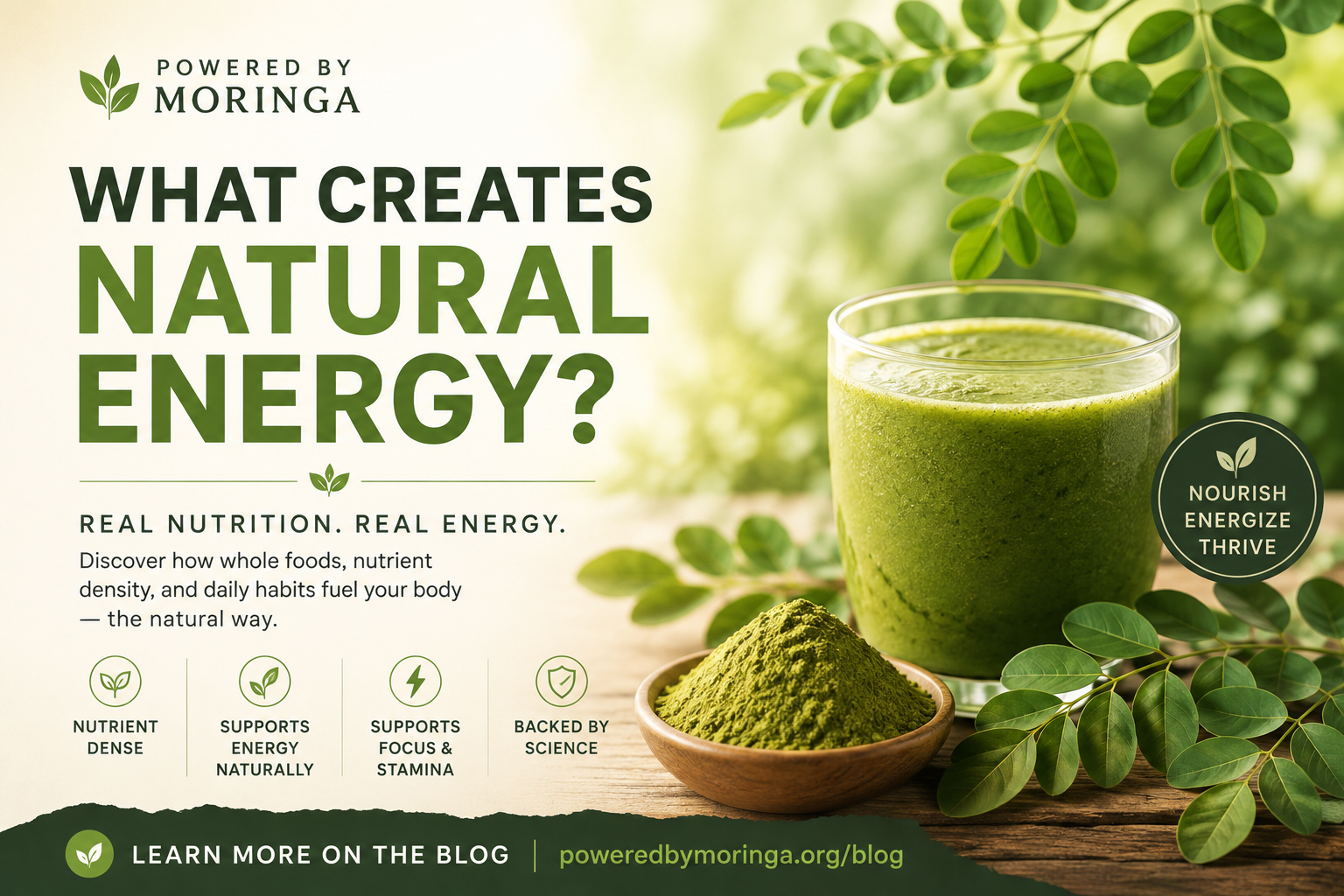
The Question Nobody Asks Correctly
When people feel tired, they reach for caffeine. When they feel sluggish, they look for a quick fix. But very few people stop to ask a more fundamental question: what actually creates energy in the first place?
The answer isn't coffee. It isn't a pre-workout. It isn't even sleep — although sleep matters enormously.
The foundation of real, sustained, natural energy is nutrition.
Energy vs. Fatigue: They Are Not the Same Thing
This distinction matters more than most people realize.
Reducing fatigue and increasing energy are two completely different outcomes. Most of what we reach for — caffeine, sugar, energy drinks — works by temporarily suppressing the feeling of tiredness. It doesn't actually create energy. It borrows against it.
True energy is different. It's not the absence of tiredness. It's the presence of vitality.
Think about a child — the kind of energy a healthy 12-year-old has. They can sleep for hours and wake up ready to move, play, learn, and go all day. That's not the absence of fatigue. That's an abundance of energy. That's what the body is capable of when it's properly nourished and supported.
Most adults have forgotten what that feels like. But it's not gone. It's just been gradually depleted by years of inconsistent nutrition, processed food, and a body that's been running on less than it needs.
How the Body Actually Makes Energy
At a cellular level, energy production depends on a continuous supply of micronutrients.
Your mitochondria — the structures inside your cells that produce energy — require B vitamins, magnesium, iron, Coenzyme Q10, and a range of other nutrients to function properly. When these are in short supply, energy production slows. Not dramatically at first. Gradually. Imperceptibly. Until one day you realize you haven't felt genuinely energetic in years.
This is why whole-food nutrition — not isolated supplements, not caffeine — is the real long-term answer to energy. You're not masking a symptom. You're providing the raw materials the body needs to produce energy at a cellular level.
Why Nutrition Takes Time to Work
Here's the part that requires patience — and an honest conversation.
Nutritional energy is not instant. You won't take a whole-food supplement on Monday and feel like a different person on Tuesday. That's not how the body works, and anyone who tells you otherwise isn't being straight with you.
What actually happens is this: with consistent daily nutrition, the body gradually recognizes that support is ongoing. It stops conserving and starts investing. Over 30 days, you may notice subtle shifts — slightly better mornings, more consistent energy through the afternoon. Over 60 days, those shifts become more noticeable. Over 180 days, people often describe feeling fundamentally different in ways they struggle to articulate — more resilient, more present, more like themselves.
This is the body adapting to consistent nourishment. It's not a shortcut. But it's real.
What Drains Natural Energy
Understanding what creates energy also means understanding what depletes it.
The biggest culprits are ones most people already suspect but underestimate:
Nutritional gaps. Even a single significant deficiency — iron, magnesium, B12, Vitamin D — can meaningfully impair energy production. And because modern diets are high in calories but often low in micronutrients, gaps are far more common than most people think.
Inconsistency. The body doesn't store most micronutrients in large reserves. It needs regular supply. A great week of nutrition followed by two weeks of convenience food means the body never builds the consistent foundation it needs.
Processed foods. Calorie-dense but nutrition-poor foods fill us up without fueling us. The body gets the energy signal (calories) but not the support it needs to use that energy efficiently.
Oxidative stress. Free radicals — produced by stress, pollution, processed food, and the normal process of living — interfere with cellular energy production. Antioxidants are the body's defense. When antioxidant intake is low, oxidative stress accumulates quietly over time.
What Actually Helps
Whole-food nutrition that delivers:
Complete amino acids — the building blocks your body uses for repair, hormone production, and cellular function. Moringa is one of the few plants that contains all nine essential amino acids.
Antioxidants — to reduce oxidative stress and protect the cellular machinery that produces energy.
B vitamins and minerals — the cofactors that make cellular energy production possible.
Consistency — delivered daily, in a form that's easy enough to actually stick with.
This isn't about a single superfood or a single supplement. It's about giving your body a reliable, complete nutritional foundation — every day — and then getting out of the way while it does what it's designed to do.
The Bottom Line
Natural energy isn't something you find in a can or a capsule of caffeine. It's something your body creates — when it has what it needs, consistently, over time.
The question isn't which energy product to reach for. The question is whether your body has the nutritional foundation to produce energy the way it was designed to.
That foundation starts with nutrition. And it starts with consistency.
Scientific References
1. Leone A, Spada A, Battezzati A, et al. Cultivation, Genetic, Ethnopharmacology, Phytochemistry and Pharmacology of Moringa oleifera Leaves: An Overview. Int J Mol Sci. 2015;16(6):12791-12835. Documents moringa's complete amino acid profile (all nine essential amino acids), B vitamins, iron, and magnesium content relevant to cellular energy production. PubMed
2. Anwar F, Latif S, Ashraf M, Gilani AH. Moringa oleifera: a food plant with multiple medicinal uses. Phytother Res. 2007;21(1):17-25. Nutritional analysis confirming moringa's micronutrient density, including energy-metabolism cofactors. PubMed
These references support the nutritional claims made in this article. For our full evidence-review methodology, see [how we assess evidence](/editorial-standards).
This article is for educational purposes and is not medical advice. Speak with a qualified healthcare provider before starting any new supplement.
About the Formulator
Vital 1 by CoLab was formulated by Joshua Plant, PhD, a biomedical scientist with a Harvard doctorate and over 13 years of expertise in botanical formulation and nutritional science. His work focused on whole-plant sourcing, evidence-based ingredient selection, and shade-dried processing to preserve the full spectrum of nutrients.
Learn more about Joshua Plant, PhD and the science behind Vital 1Vital 1 Was Built Around This Idea
Vital 1 by CoLab brings together whole-plant Moringa — with all nine essential amino acids, powerful antioxidants, and essential vitamins and minerals — alongside a botanical blend specifically chosen to support energy, immunity, and overall vitality.
Not a caffeine hit. A nutritional foundation.
Now available. Connect with a Wellness Guide to get started and unlock exclusive offers.
🎁 Connect with a Wellness Guide to unlock exclusive offers and member-only perks.
Get StartedWhere would you like to go from here?
No pressure — just a few ways to take the next step, whenever you're ready.
Explore the research
Dig into what the studies actually show about moringa across different areas of health.
Read the benefitsTry it yourselfMake it part of your day
See Vital 1 — whole-plant moringa with 8 supporting botanicals — and how to get started.
Discover Vital 1Share it forwardHelp others learn too
If moringa has helped you, there is a calm way to share it with others — on your terms.
Explore the path