What Is Moringa?
Nature's Most Remarkable Nutrient-Dense Plant
Everything you need to know about the Miracle Tree — what it is, why it matters, how it's grown and processed, and what to look for when choosing a product.
In This Guide
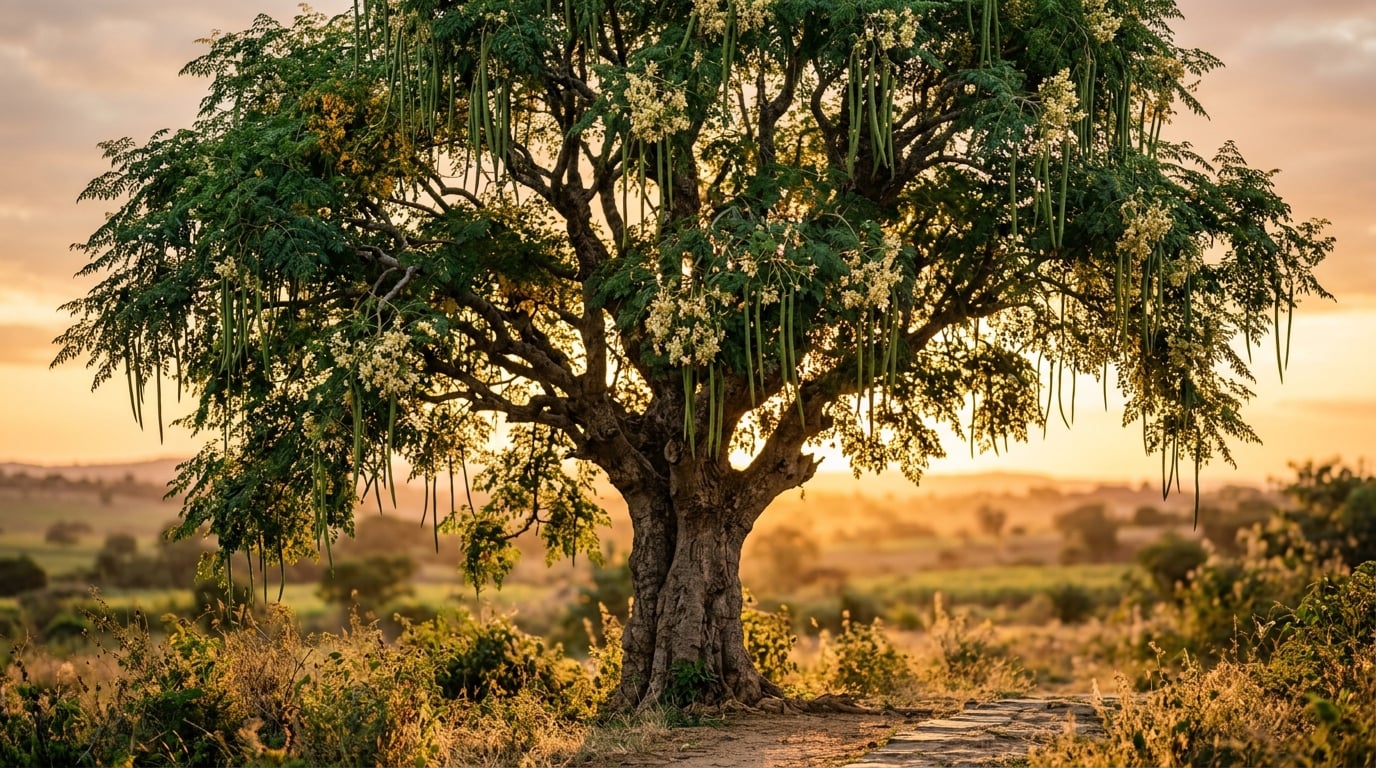
Moringa (Moringa oleifera) is a fast-growing tree native to parts of South Asia and now cultivated throughout tropical and subtropical regions around the world. Often called the “Miracle Tree” or the “Tree of Life,” moringa has been valued for centuries because nearly every part of the plant can be utilized for food, wellness, or agricultural purposes.
Today, moringa has gained global attention because of its impressive nutritional profile and its ability to thrive in challenging growing conditions. Its leaves, seeds, fruit, flowers, and roots have all been used traditionally in various cultures, making it one of the most versatile plants on earth.
Botanical Identity and Common Names
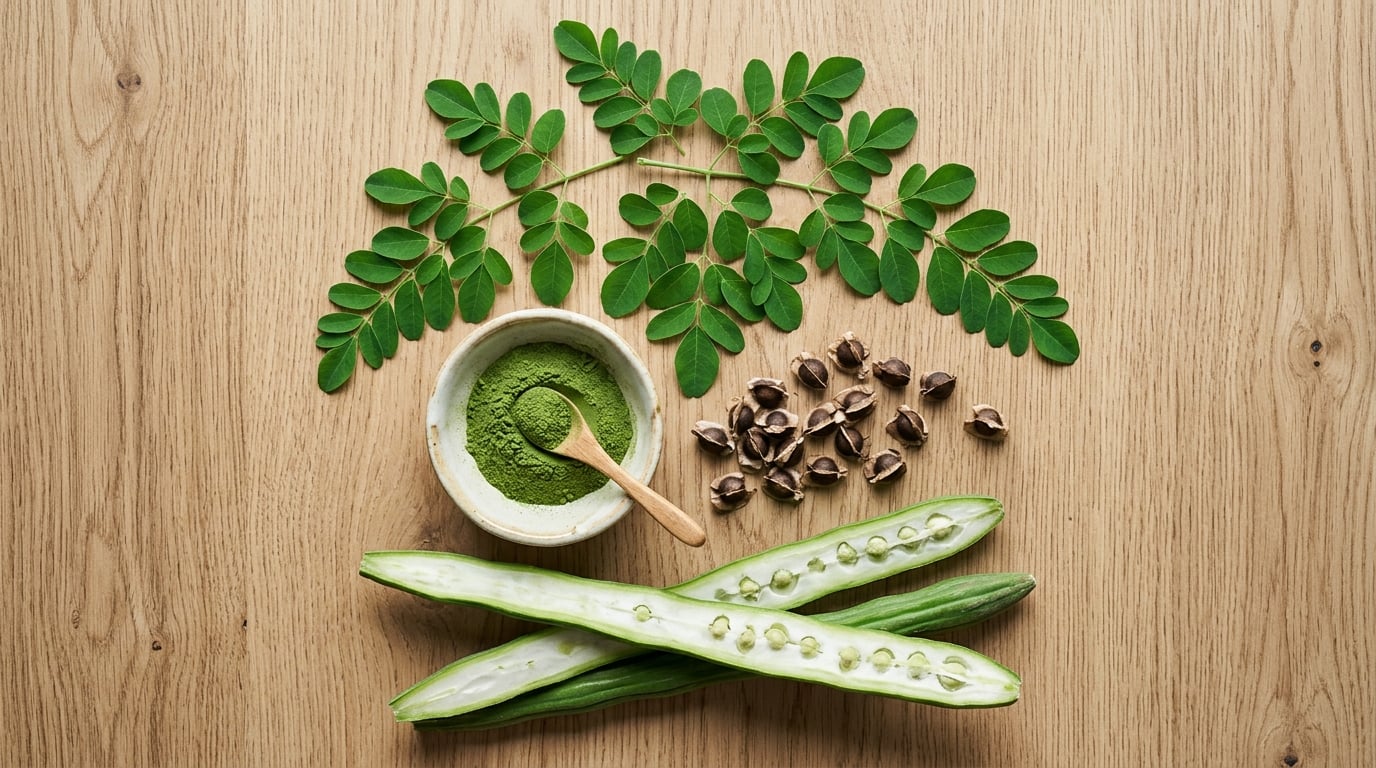
Moringa oleifera Lam. is the most widely cultivated of the thirteen species in the genus Moringa, the only genus in the family Moringaceae. It is a deciduous, fast-growing tree that reaches roughly 10 to 12 metres, with a soft, corky trunk, tripinnate leaves made up of small oval leaflets, cream-white fragrant flowers, and long ridged seed pods.
It travels under a lot of names, which is a common source of confusion when comparing products or reading research:
Drumstick tree
English — after the shape of the pods
Horseradish tree
English — after the pungent root
Ben oil tree
English — after behenic acid in the seed oil
Sahjan / Sahijan
Hindi
Munagakaya / Murungai
Telugu / Tamil
Malunggay
Filipino
Shajna
Bengali
Marango
Spanish (Central America)
One practical warning: Moringa stenopetala, the African moringa, is a different species with a different composition, and a handful of unrelated plants are sold locally as “moringa.” If a product does not name the species, that is worth noticing.
Where Moringa Comes From — and Where It Grows Today
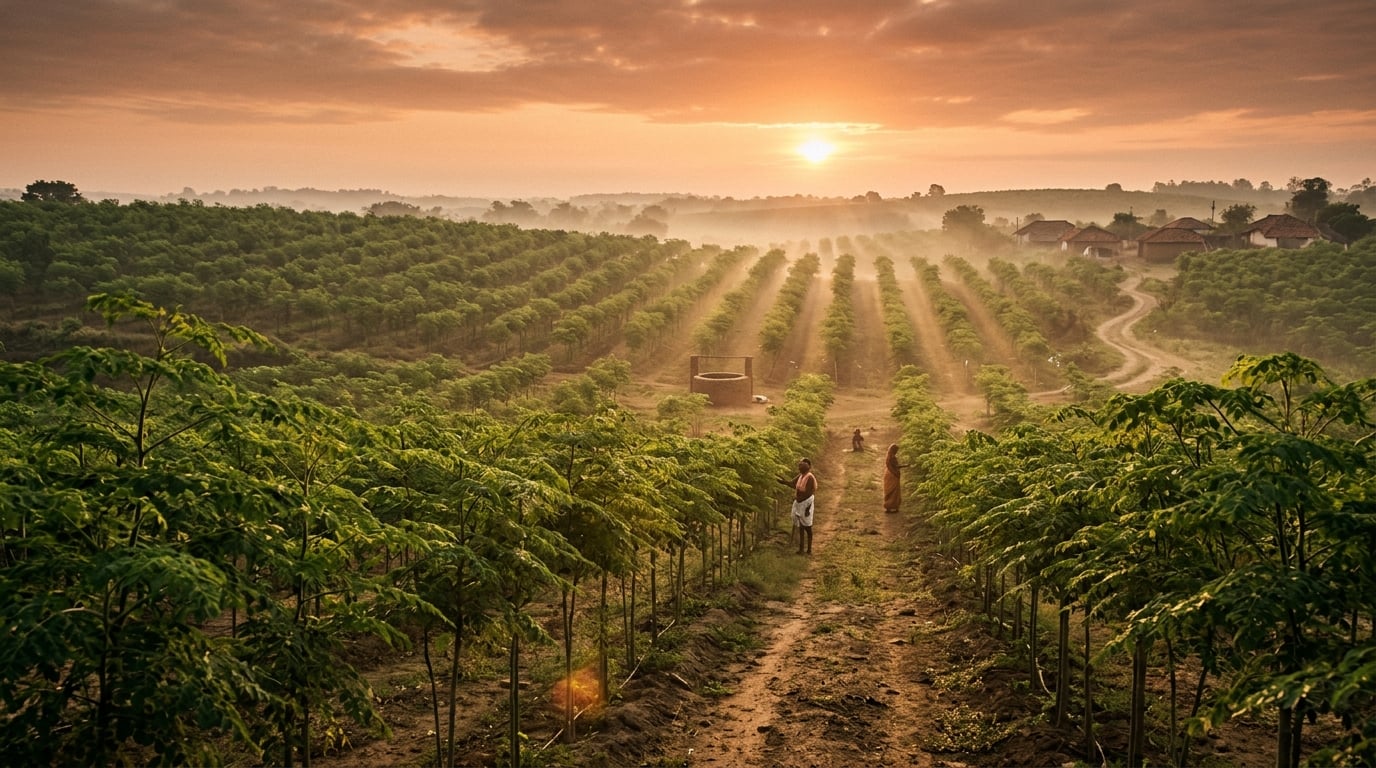
Moringa oleifera originated in the sub-Himalayan foothills of northwestern India, in the region spanning present-day Uttar Pradesh, Bihar, and parts of Pakistan. From there it spread along trade and colonial routes into Africa, Southeast Asia, the Caribbean, Central and South America, and the Pacific.
India remains by far the largest producer, with substantial cultivation in Tamil Nadu, Andhra Pradesh, and Karnataka. Significant production also exists in the Philippines, Thailand, Kenya, Ghana, Nigeria, Mexico, Nicaragua, and parts of Central America.
The tree thrives in hot, semi-arid conditions and tolerates poor soils and long dry seasons that would defeat most leafy crops. That resilience is a large part of why it became a food-security crop long before it became a supplement — and why growing region, soil, and rainfall have such a visible effect on the nutrient content of the finished powder.
Why Is Moringa So Popular?
Modern interest in moringa stems from its extraordinary nutritional density.
The leaves naturally contain:
- Vitamins
- Minerals
- Amino acids
- Antioxidants
- Plant phytonutrients
Unlike many highly processed supplements, moringa is a whole food. This means the nutrients exist within the plant's natural structure rather than being isolated and added back artificially.
Many people are attracted to moringa because it offers a simple way to increase nutrient intake through a plant-based source.
Nutritional Composition
The figures below are typical values for dried moringa leaf powder, per 100 grams, drawn from the peer-reviewed compositional literature. Published values vary widely between studies because growing region, harvest stage, and drying method all move the numbers — treat these as a representative range, not a fixed specification.
| Nutrient | Per 100 g dried leaf | In a 5 g serving |
|---|---|---|
| Protein | 25–30 g | ~1.3–1.5 g |
| Calcium | ~2,000 mg | ~100 mg |
| Potassium | ~1,300 mg | ~65 mg |
| Iron (non-heme) | ~28 mg | ~1.4 mg |
| Vitamin C | Highly variable; much is lost in drying | Small |
| Beta-carotene | ~16–18 mg | ~0.8–0.9 mg |
| Dietary fibre | ~19–20 g | ~1 g |
The third column is the part most articles leave out, and it is the part that matters. Nobody eats 100 grams of moringa powder. A typical serving is two to five grams, so the honest way to read the table is: moringa is a meaningful contributor of calcium, iron, beta-carotene, and plant compounds at realistic doses — and it is not a protein source at those doses, whatever the per-100-gram figure suggests.
This is also why we do not publish claims in the “seven times more vitamin C than oranges” format. Those comparisons almost always weigh dried moringa powder against a fresh, water-heavy food, which is not a like-for-like comparison.
Primary compositional source: Leone A, et al. Cultivation, Genetic, Ethnopharmacology, Phytochemistry and Pharmacology of Moringa oleifera Leaves. Int J Mol Sci. 2015;16(6):12791–12835.
The Different Parts of the Moringa Tree
One of the most misunderstood aspects of moringa is that many products use only the leaves. However, the moringa tree contains several nutritionally valuable parts.
The Leaves
The most commonly used portion of the tree. They contain:
- Vitamins A, C, and K
- Iron & Calcium
- Potassium & Protein
- Antioxidants
The leaves are often dried and milled into powder for convenient daily use.
The Seeds
Moringa seeds contain unique plant compounds, healthy fats, and additional nutrients not found in the same concentrations within the leaves.
They have been valued traditionally for both nutritional and practical applications.
The Fruit
The terms “fruit,” “pod,” and “drumstick” all refer to the same part of the moringa tree — the long, ridged seed casing that grows from the branches. This portion contributes additional naturally occurring plant compounds and nutrients, making it an important component in whole-plant formulations.
Traditional Uses
Long before moringa was a supplement, it was food, fodder, and infrastructure. In South Asian cooking the immature pods are a staple vegetable — the “drumsticks” in drumstick sambar — and the leaves are cooked much like spinach. In the Philippines, malunggay leaves are stirred into soups such as tinola. Across the Sahel, dried leaf powder has been used in supplementary feeding programmes for exactly the reason the modern market found it: a lot of nutrition from a plant that grows in poor soil and little rain.
The seeds have a separate history entirely. Crushed moringa seed contains cationic proteins that flocculate suspended particles in turbid water, which is why the seed has been used as a low-cost water clarifier — a genuinely well-documented use that is often confused, in marketing copy, with “detoxifying the body.” It clarifies water. That is a different claim.
Ayurvedic and other traditional systems record a much longer list of uses than this. We mention them as history, not as evidence of effect: traditional use tells you a plant was valued and widely tolerated, not that it treats a condition.
What Modern Research Actually Shows
Moringa has been studied a great deal — several thousand papers now — but the shape of that literature matters more than its size. The overwhelming majority is laboratory work on extracts and animal studies, particularly in rodent models of liver injury, blood sugar dysregulation, and inflammation. That work is where most of the dramatic claims you have read online come from.
Human research exists and is growing, but it is thinner. Trials tend to be small, short, and heterogeneous in the material tested — different plant parts, different doses, different extraction methods, in populations that are often not comparable. A 2025 umbrella review of moringa's immunomodulatory and metabolic literature reached the same conclusion most careful reviews do: biologically plausible, encouraging signals, insufficient high-quality human data to make firm clinical claims.
The most defensible framing is the simplest one. Moringa leaf is a genuinely nutrient-dense whole food with a well-characterised composition. That much is settled. What a daily few grams of it does for a specific health outcome in a specific person is, in most cases, not.
Where the Evidence Is Limited
- Most published effects come from concentrated extracts, not from the few grams of whole dried powder in a typical serving.
- Animal doses are frequently far higher, per kilogram of body weight, than any human would consume.
- Human trials are usually under twelve weeks, so nothing is known about long-term daily use.
- Nutrient content varies substantially between batches, regions, and drying methods, which makes results hard to replicate.
- No controlled human trial has demonstrated that a whole-plant preparation outperforms leaf alone.
Why Source Matters
Not all moringa is created equal.
Growing conditions can influence:
Climate, soil quality, rainfall, sunlight exposure, and harvesting methods all play a role in the final nutritional profile of the plant.
This is why premium moringa producers focus heavily on sourcing standards rather than simply growing the largest volume possible.
Why Harvesting Matters
Timing is critical.
Plants continue developing nutrients throughout their growth cycle. Harvesting too early may reduce nutritional maturity. Harvesting too late may impact quality and freshness.
Premium producers often harvest at carefully selected growth stages to maximize quality before processing begins.
Why Drying Methods Matter
Once harvested, the drying process becomes extremely important.
Excessive heat and prolonged sun exposure can degrade certain naturally occurring compounds found in plants.
Many premium moringa producers use shade-drying techniques that rely on airflow and lower temperatures to help preserve the plant material.
The goal is simple: Protect the nutritional integrity of the plant from harvest to final product.
How Moringa Products Differ
Two tubs of moringa powder can sit side by side on a shelf and have very little in common. The label rarely tells you which is which, so it helps to know what actually varies:
- Which parts are used. Most products are leaf only. A smaller number use leaf plus seed and pod.
- Where it was grown, and under what conditions. Soil, rainfall, and altitude all move the nutrient numbers.
- When it was harvested, and at which growth stage.
- How it was dried. Sun-drying is cheap; shade-drying and low-temperature drying preserve more of the heat-sensitive compounds.
- How long it has been sitting. Carotenoids and vitamin C keep degrading after the powder is milled.
- Whether it is tested. Third-party testing for heavy metals and microbial load is not universal in this category.
This is the honest reason published nutrient tables for moringa vary so widely. The figures above are typical ranges for well-handled dried leaf, not a guarantee about any specific product — including ours.
What Does Moringa Taste Like?
Moringa has a naturally earthy, green flavor that many people compare to spinach, matcha, or fresh garden greens. Some describe subtle peppery notes.
Because of its mild flavor profile, moringa can be mixed into:
How Long Does It Take to Notice a Difference?
Nutrition works differently than stimulants.
Rather than delivering an immediate effect, nutritional improvements typically occur through consistent daily habits over time.
Many wellness experts emphasize consistency over perfection. A daily nutrition routine maintained for months often provides more value than occasional periods of perfect nutrition.
Is Moringa Safe?
Moringa leaf has a long history of use as an everyday food in India, the Philippines, and much of sub-Saharan Africa, and human trials of leaf powder have generally reported it to be well tolerated at the doses studied. That food history is the strongest thing anyone can honestly say about its safety profile — it is not the same as a formal long-term safety study.
A few distinctions genuinely matter:
- Leaves, seeds, and pods are the parts used in food and in reputable supplements.
- Root and root bark are a different matter. They contain alkaloids that are not present in the leaf at meaningful levels, and they are not considered appropriate for supplement use.
- Pregnancy and breastfeeding deserve their own conversation, because the traditional and animal literature treats root and bark very differently from leaf.
- If you take medication for blood sugar, blood pressure, or thyroid function, or you take anticoagulants, speak with your prescriber before adding a concentrated plant powder to your routine.
None of this is medical advice, and nothing on this site is intended to diagnose, treat, cure, or prevent any disease.
Frequently Asked Questions
Is moringa a tree or a herb?
Moringa oleifera is a fast-growing tree.
Which part of moringa is best?
Different parts of the tree contribute different nutrients and plant compounds. Many premium formulations utilize multiple parts of the plant rather than relying solely on the leaves.
Can moringa be taken daily?
Many people choose to incorporate moringa into a daily wellness routine as part of a balanced diet and healthy lifestyle.
Why is moringa called the Tree of Life?
Because nearly every part of the tree has traditionally been used for food, agriculture, or wellness purposes.
Final Thoughts
Moringa is far more than a trending superfood.
It is one of nature's most versatile and nutrient-dense plants, valued for centuries and now receiving growing attention from modern researchers and wellness professionals.
Understanding the plant — how it is grown, harvested, and processed — provides important context for choosing high-quality moringa products and building a consistent nutrition routine.
Ready to Experience Whole-Plant Moringa?
Vital 1 by CoLab combines shade-dried Moringa — leaves, seeds, and fruit — with broccoli, broccoli sprouts, sweet potato, maitake mushroom, spinach, chia, pumpkin & sunflower seeds.
Nine whole foods in one sachet. Formulated by Joshua Plant, PhD. Now available.
Learn More