Why Whole-Plant Moringa Matters
Most moringa products use only the leaves. Here's what the rest of the plant contributes — and why that matters.
The leaf-only problem
If you've seen moringa in a store or online, it was almost certainly leaf powder. That's because moringa leaves are the easiest part of the plant to harvest, dry, and turn into a fine powder. They also have the longest history of commercial use.
There's nothing wrong with moringa leaf. It's one of the most nutrient-dense greens studied. But using only the leaves means you're getting one fraction of what the Moringa oleifera tree actually produces.
It would be like eating only the flesh of an orange and discarding the peel, pith, and seeds — each of which contains compounds the flesh alone doesn't provide.
Moringa has three distinct, usable parts: the leaves, the seeds, and the fruit (pods). Each contributes something the others don't.
The Leaves
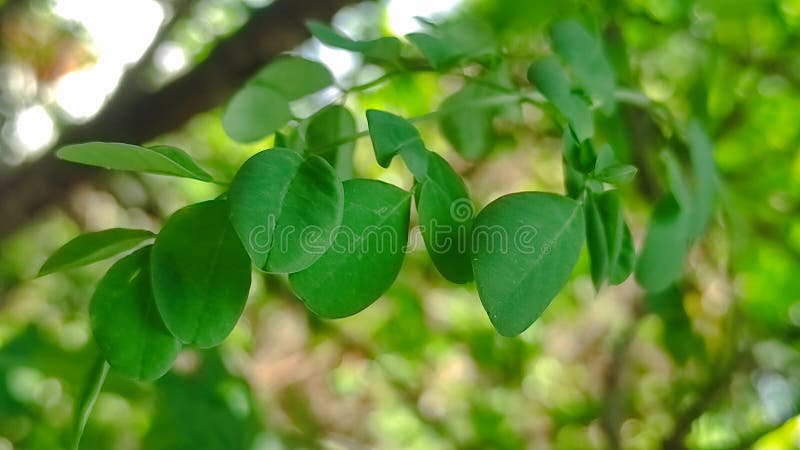
Moringa leaves are the nutritional foundation. They're where you find the broadest spectrum of vitamins, minerals, and amino acids — the reason moringa earned its reputation in the first place.
The leaves contain all nine essential amino acids, which is unusual for a plant. They're a significant source of iron, calcium, Vitamin A (as beta-carotene), Vitamin C, B vitamins, and magnesium. Gram for gram, moringa leaf delivers higher concentrations of several micronutrients than common reference foods.
They also provide quercetin and chlorogenic acid — two well-studied antioxidants that appear consistently in the moringa literature.
Key contributions from the leaves:
- All 9 essential amino acids
- Iron, calcium, magnesium, potassium
- Vitamin A, C, E, and B-complex
- Quercetin and chlorogenic acid (antioxidants)
- Highest protein content of the three plant parts
Moringa leaves are the most studied part of the plant — but they're not the whole story.
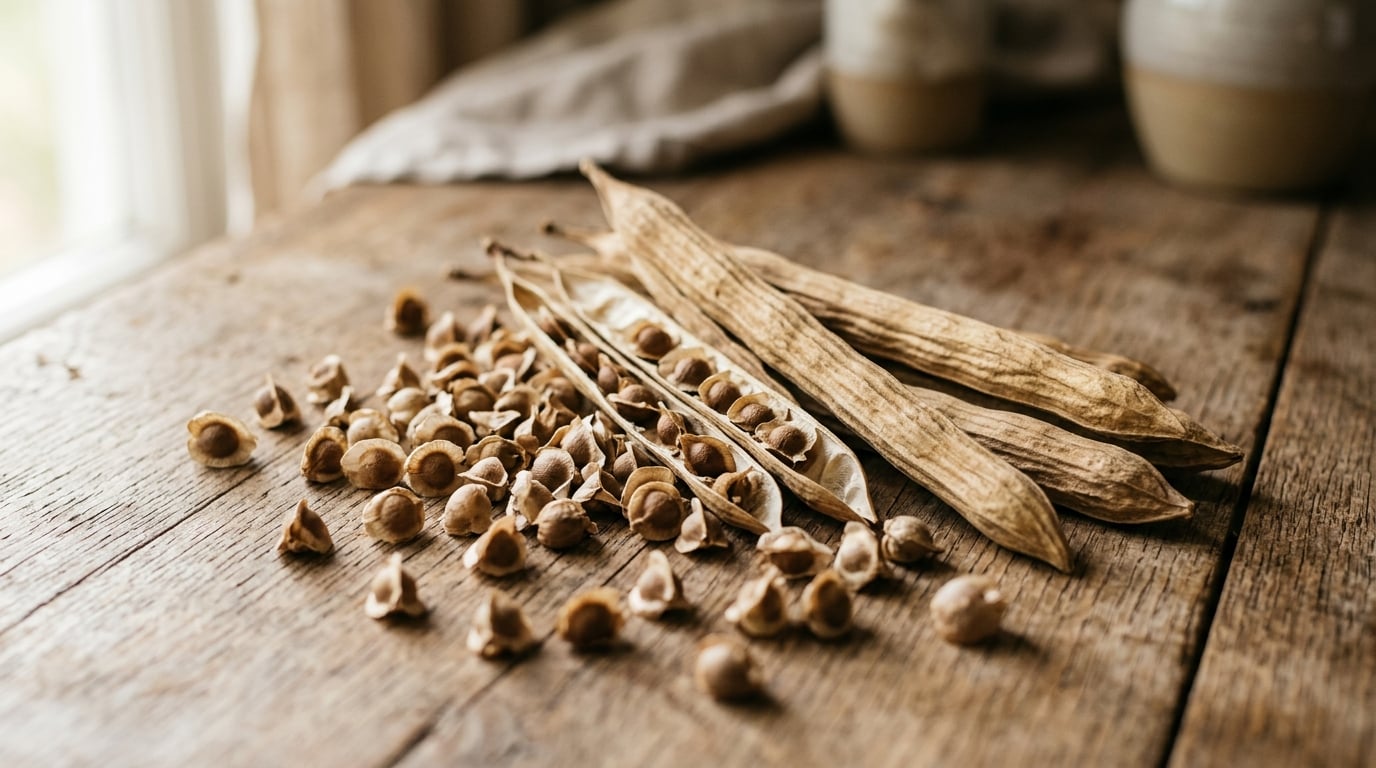
Moringa seeds contain compounds that don't appear in the leaves at all.
The Seeds
Moringa seeds are the part most supplement companies leave out entirely. They're harder to process and less familiar to consumers — but they contain compounds that simply aren't present in the leaves.
The seeds are rich in oleic acid, the same heart-healthy monounsaturated fatty acid found in olive oil. Moringa seed oil (sometimes called Ben oil) has been valued for centuries, and the seeds themselves provide this benefit in whole-food form.
They also contain unique compounds including moringine and moringinine — alkaloids specific to the Moringa oleifera seed that researchers have studied for their potential biological activity.
Additionally, moringa seeds have been extensively studied for their natural water-purification properties. The proteins in the seed act as a natural coagulant — a property that hints at the seed's distinct biochemistry compared to the leaf.
Key contributions from the seeds:
- Oleic acid (monounsaturated fatty acid)
- Moringine and moringinine (seed-specific compounds)
- Natural coagulant proteins
- Fiber and additional mineral content
- Compounds not found in the leaves
The Fruit (Drumstick Pods)
In South Asia and parts of Africa, moringa fruit is a dietary staple — not a supplement. Called "drumsticks" for their long, ridged shape, the immature pods are cooked into soups, stews, and curries as an everyday vegetable.
The fruit is particularly high in Vitamin C — significantly more than the leaves on a fresh-weight basis. It also provides dietary fiber and a different set of phytonutrients than what you'll find in either the leaves or seeds.
The pods contain isothiocyanates, which are a class of compounds also found in cruciferous vegetables like broccoli and are the subject of ongoing nutritional research.
Perhaps most importantly, the fruit contributes diversity. Different plant parts have different biochemical profiles — and there's a growing body of research suggesting that the synergy between plant compounds may matter as much as any individual nutrient.
Key contributions from the fruit:
- Highest Vitamin C content of the three plant parts
- Dietary fiber for gut health
- Isothiocyanates (also found in broccoli)
- Unique phytonutrients not present in leaves or seeds
- Traditional food staple across cultures for centuries
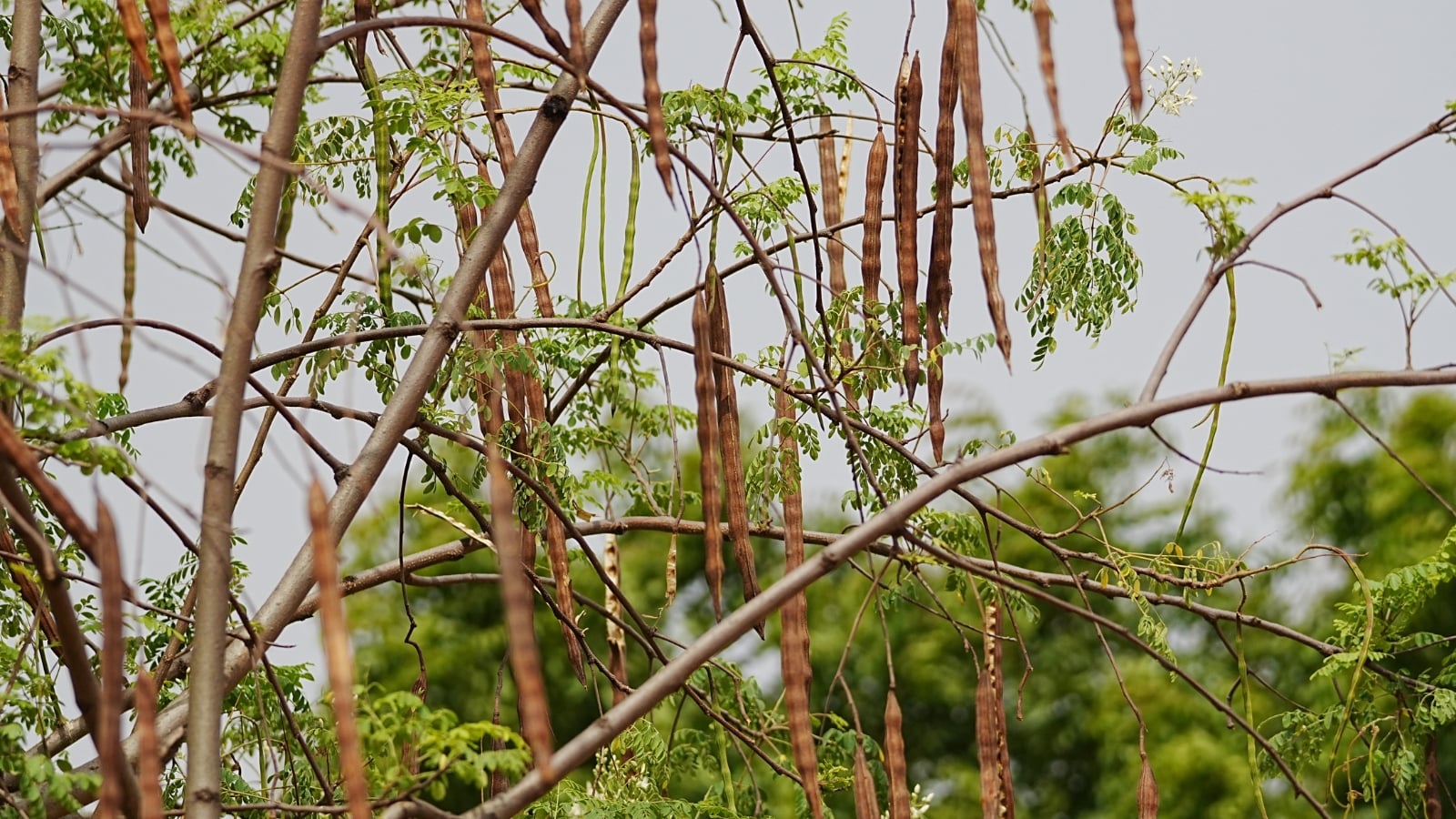
Moringa pods ("drumsticks") are a daily food across South Asia — not just a supplement ingredient.
Why do most products use only the leaves?
It's not a quality decision — it's a supply chain and cost decision.
Moringa leaves can be harvested multiple times per year from a single tree. They dry easily, powder smoothly, and the resulting product has a familiar green-powder look that consumers expect from a superfood supplement.
Seeds and fruit are different. Seeds require additional processing steps. The fruit is seasonal, perishable, and needs careful handling to preserve its nutrients during drying. Including all three parts means a more complex supply chain, more processing steps, and higher costs.
For most manufacturers, leaf-only is the simplest, cheapest path to market. It produces a perfectly acceptable product. But "acceptable" and "complete" aren't the same thing.
Typical Moringa Product
- Leaf powder only
- —No seed compounds
- —No fruit phytonutrients
- —No oleic acid from seeds
- —No isothiocyanates from fruit
Whole-Plant Approach
- Leaves — vitamins, minerals, amino acids
- Seeds — oleic acid, unique alkaloids
- Fruit — Vitamin C, fiber, isothiocyanates
- Broader compound diversity
- Potential synergy between plant parts
Why diversity within a single plant may matter
Nutritional science has increasingly moved away from isolating individual compounds and toward understanding how whole foods and complex plant matrices work together.
The concept is sometimes called "food synergy" — the idea that the nutritional value of a whole food is greater than the sum of its isolated parts. The fiber, fats, vitamins, minerals, and phytochemicals in a plant interact with each other during digestion and absorption in ways that isolated supplements don't replicate.
When you use the whole moringa plant — leaves, seeds, and fruit — you're not just adding more nutrients to a list. You're providing a broader spectrum of compounds that may interact in the body the way whole foods are designed to.
This is the same principle behind eating a variety of fruits and vegetables rather than taking a multivitamin. The matrix matters.
How Vital 1 approaches this
Vital 1 by CoLab uses all three parts of the moringa plant — leaves, seeds, and fruit — shade-dried and sourced from India, where Moringa oleifera originated and where centuries of cultivation expertise produce some of the most nutrient-dense plants available.
Then it goes further: Vital 1 combines whole-plant moringa with eight additional whole foods — broccoli, broccoli sprouts, sweet potato, maitake mushroom, spinach, chia, pumpkin seeds, and sunflower seeds — each selected for a specific nutritional role.
The formulation was designed by Joshua Plant, PhD, whose background in biomedical sciences and botanical formulation informed both the whole-plant approach and the choice of complementary ingredients.
Nine whole foods in one sachet. Not because more ingredients is automatically better — but because each one was chosen for what it contributes that the others don't.
Continue learning
What Is Moringa?
The complete guide to the plant, its history, and the science
Benefits of Moringa
What the research says about moringa and human health
Quality & Sourcing
Why origin, harvest timing, and processing method matter
55 Scientific References
The peer-reviewed research behind every claim on this site
Ready to Try Whole-Plant Moringa?
Vital 1 by CoLab uses the complete plant — leaves, seeds, and fruit — combined with eight complementary whole foods.
Shade-dried. Sourced from India. Formulated by Joshua Plant, PhD. Now available.
Learn More